During the warmer season, equipped areas along the streams, barrier-free panoramic spots, and moments of relaxation among fortresses, castles, and authentic local flavors await you. In winter, snowy paths and accessible viewpoints offer enchanted scenery and unforgettable views.
Everywhere you will find hospitality, clear information on accessibility, and facilities ready to make your experience comfortable, safe, and unique.
Gianluca Dormicchi
AIGAE Environmental Hiking Guide – Marche Region
Ph. +39 339 3734504
naturatrekkingmarche.it
La Macina – Terre Alte
AIGAE Environmental Hiking Guide – Marche Region
Tel. 0721 700224/226 – Ph. +39 335 1230615
lamacina.it
Marche and Bike
Tel. 0721 700002 – Ph. +39 342 5295769
marcheandbike.it
Tiziano Bartolucci
AIGAE Environmental Hiking Guide – Marche Region
Ph. +39 333 4300945
Vasco Feligini
AIGAE Environmental Hiking Guide – Marche Region
Ph. +39 339 2077118

A project aimed at creating and improving infrastructure and services dedicated to responsible and sustainable tourism, while simultaneously fostering territorial education—understood as the integration of social, cultural, and environmental spheres. The goal is to enhance awareness and a sense of belonging among local residents through information campaigns, cultural events, and opportunities for community engagement.
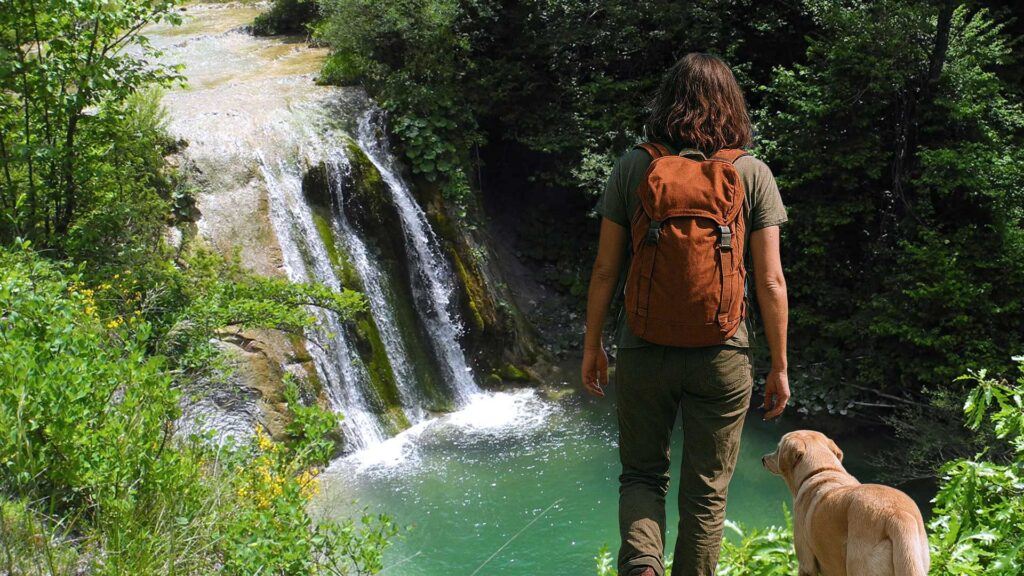
The most classic of trails, starting directly from the heart of Apecchio. A pleasant, easy loop suitable for everyone and accessible in both directions, it leads you in just a few steps to one of the most picturesque corners of the area: a splendid natural pool set in the rock, overlooked by the famous waterfall. Thanks to its features, the route is also ideal for people with disabilities, making it a truly accessible and inclusive itinerary. Perfect during the warmer season for a refreshing swim halfway through, it remains captivating and surprising in every season, amidst nature, silence, and enchanting vistas.

Starting from the village of Acquapartita, you can quickly immerse yourself in a succession of tall Turkey oaks and majestic chestnut trees. The trail winds easily through a forest dense with scents and sounds, where the sun struggles to filter through, “obstructed” by the lush canopy of trees that will keep us company throughout the entire hike.
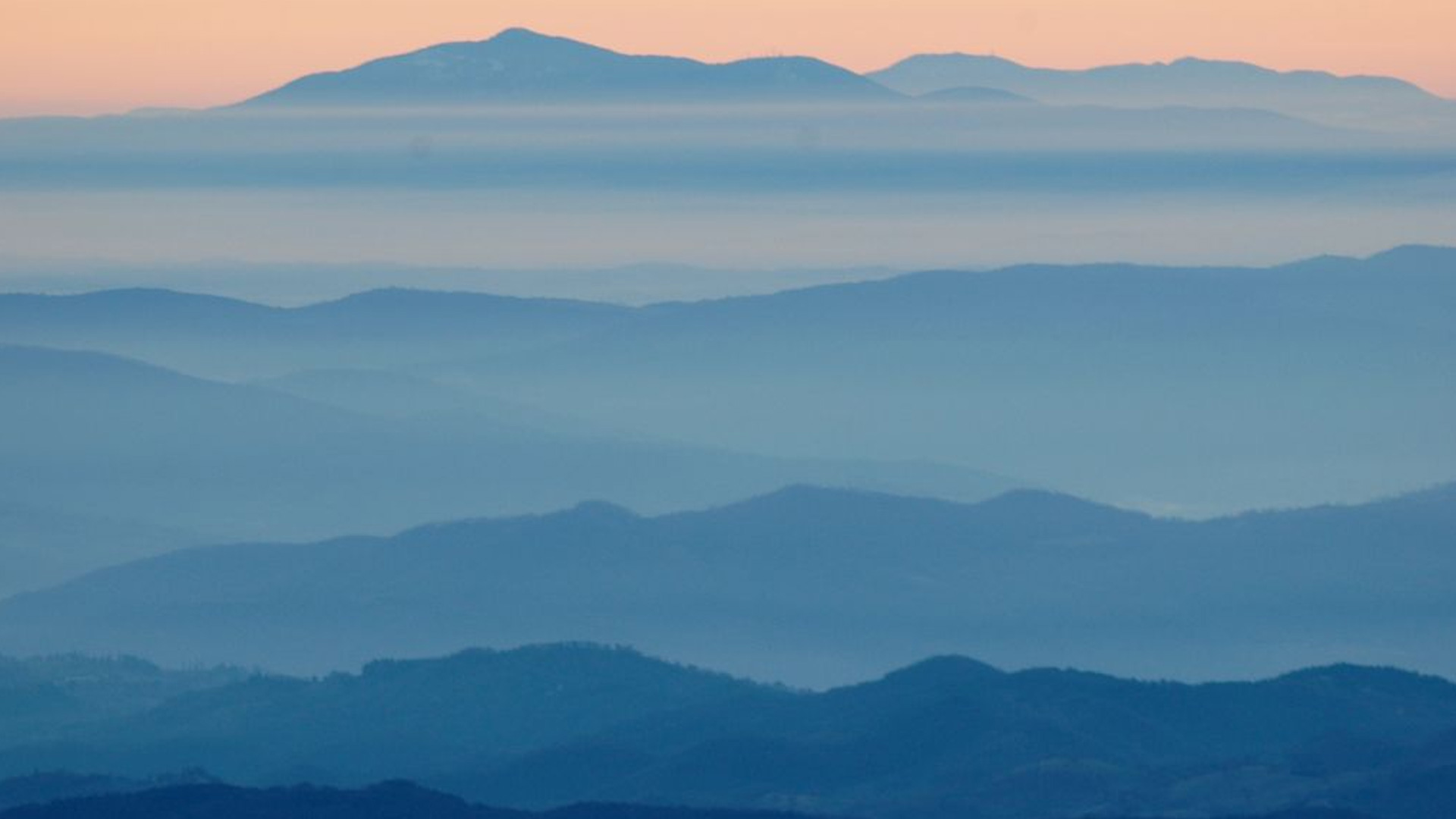
Challenging and adventurous, but certainly rewarding. Starting from Serravalle di Carda, you will reach the pasture meadows of Mount Nerone—not without effort. The panoramas and views follow one another as far as the eye can see, and will certainly make up for the exertion made to get here. In this case, more than ever, it is advisable to carefully follow the track and the signage.
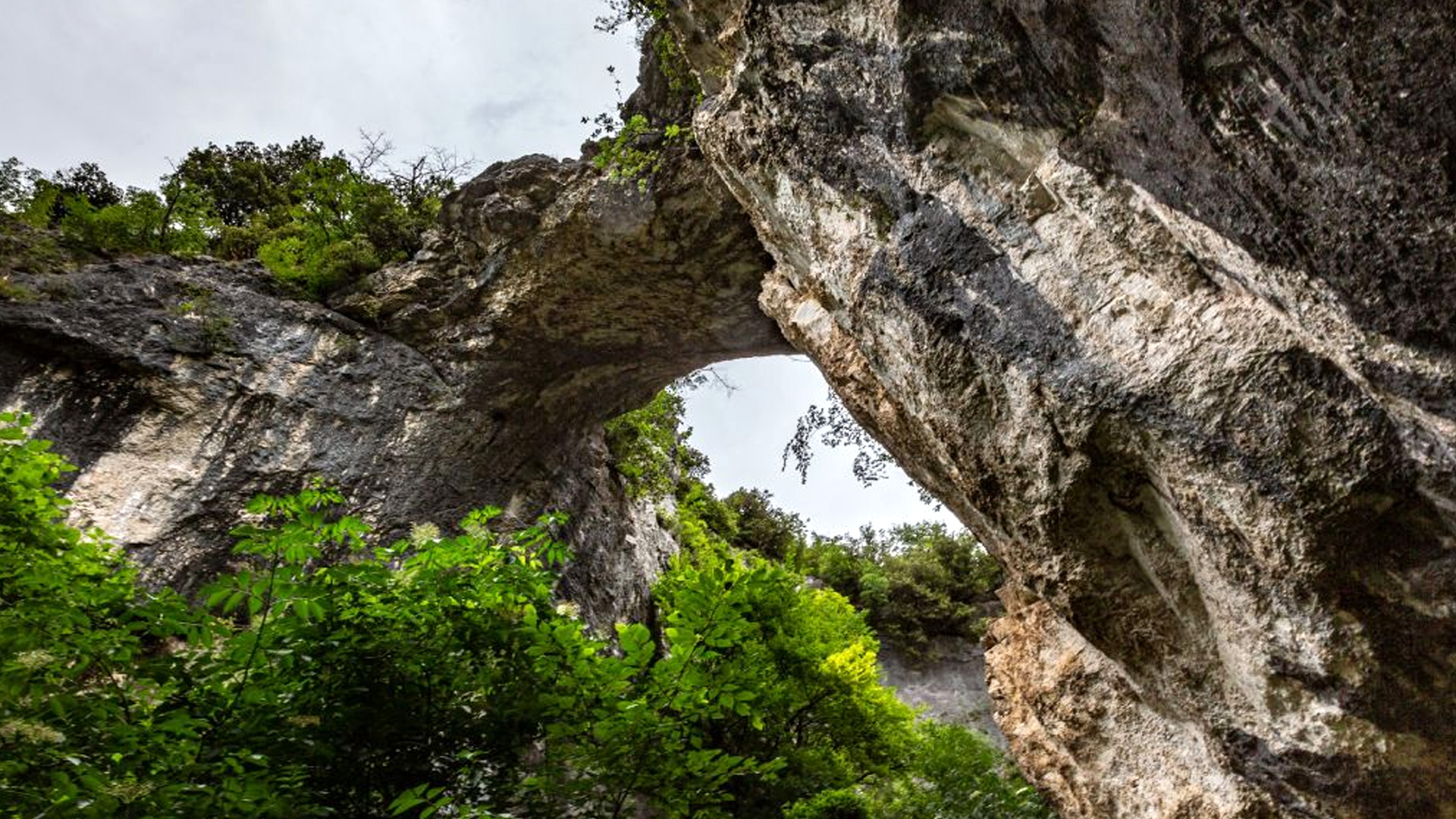
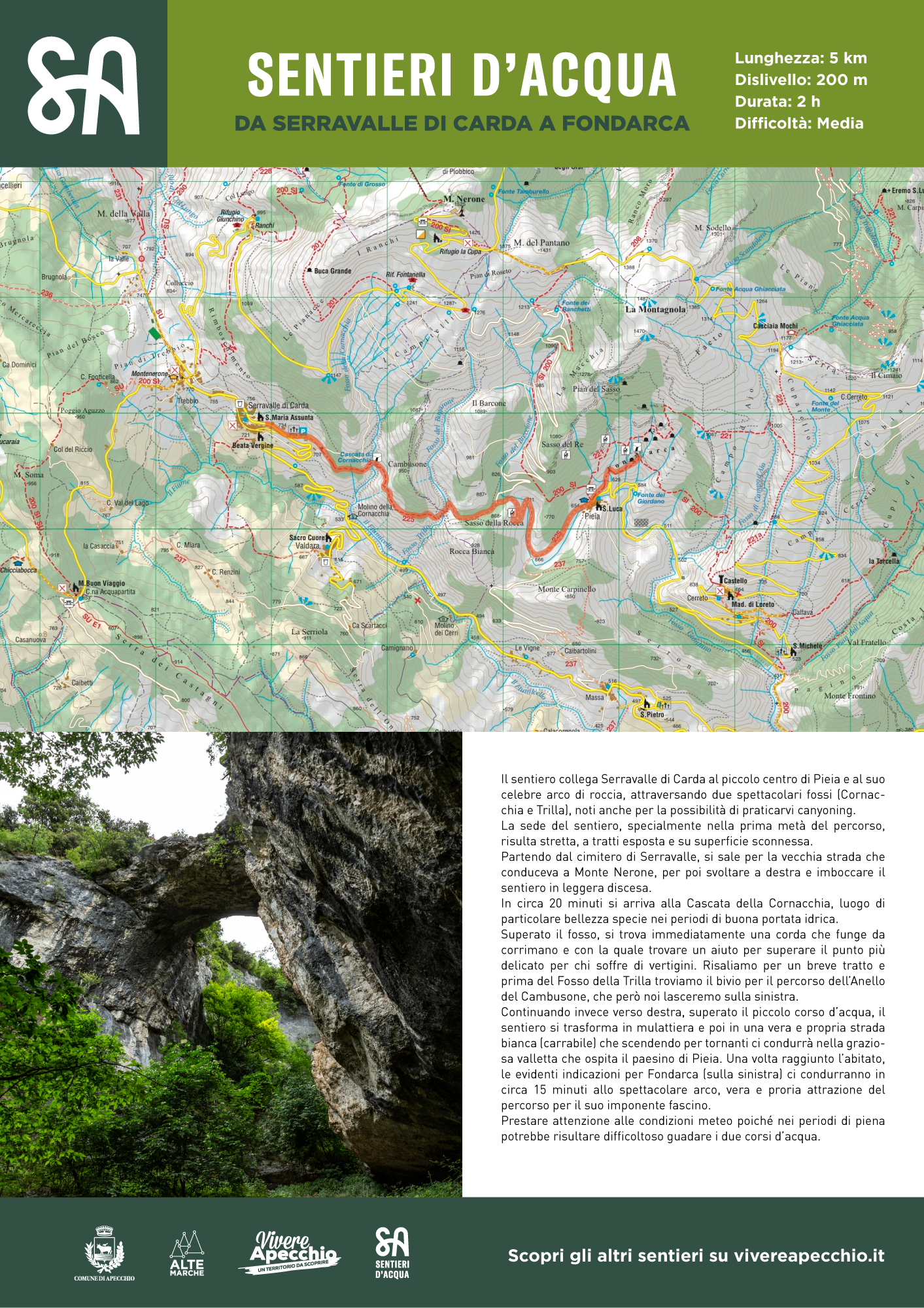
Along this trail, which remains mostly at high altitude and is relatively short, it is possible to reach one of the main attractions of Mount Nerone from Serravalle: the spectacular Fondarca Arch. The result of a collapse that occurred in the mists of time, this unique rock formation pleasantly surprises anyone who discovers it.
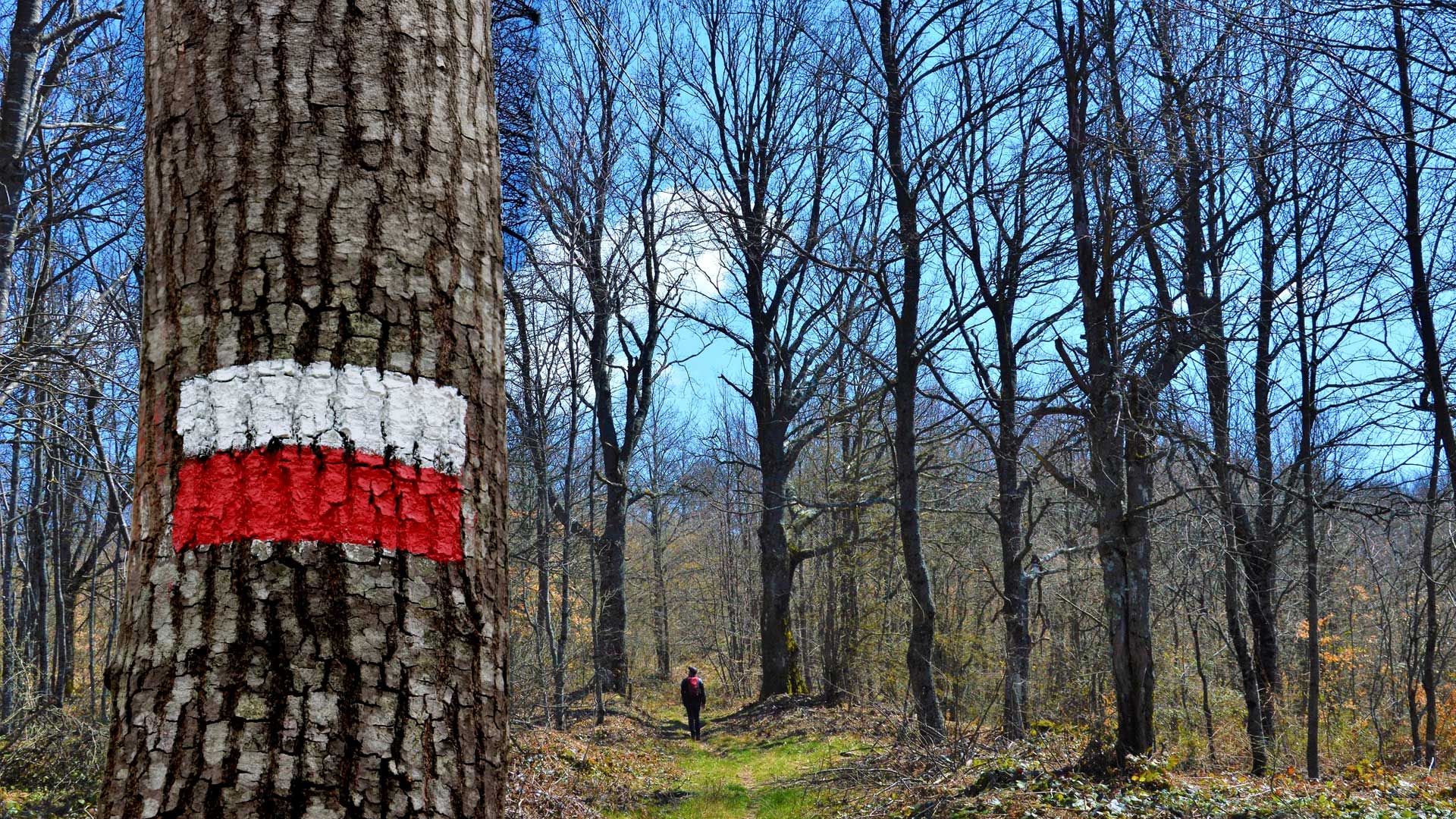
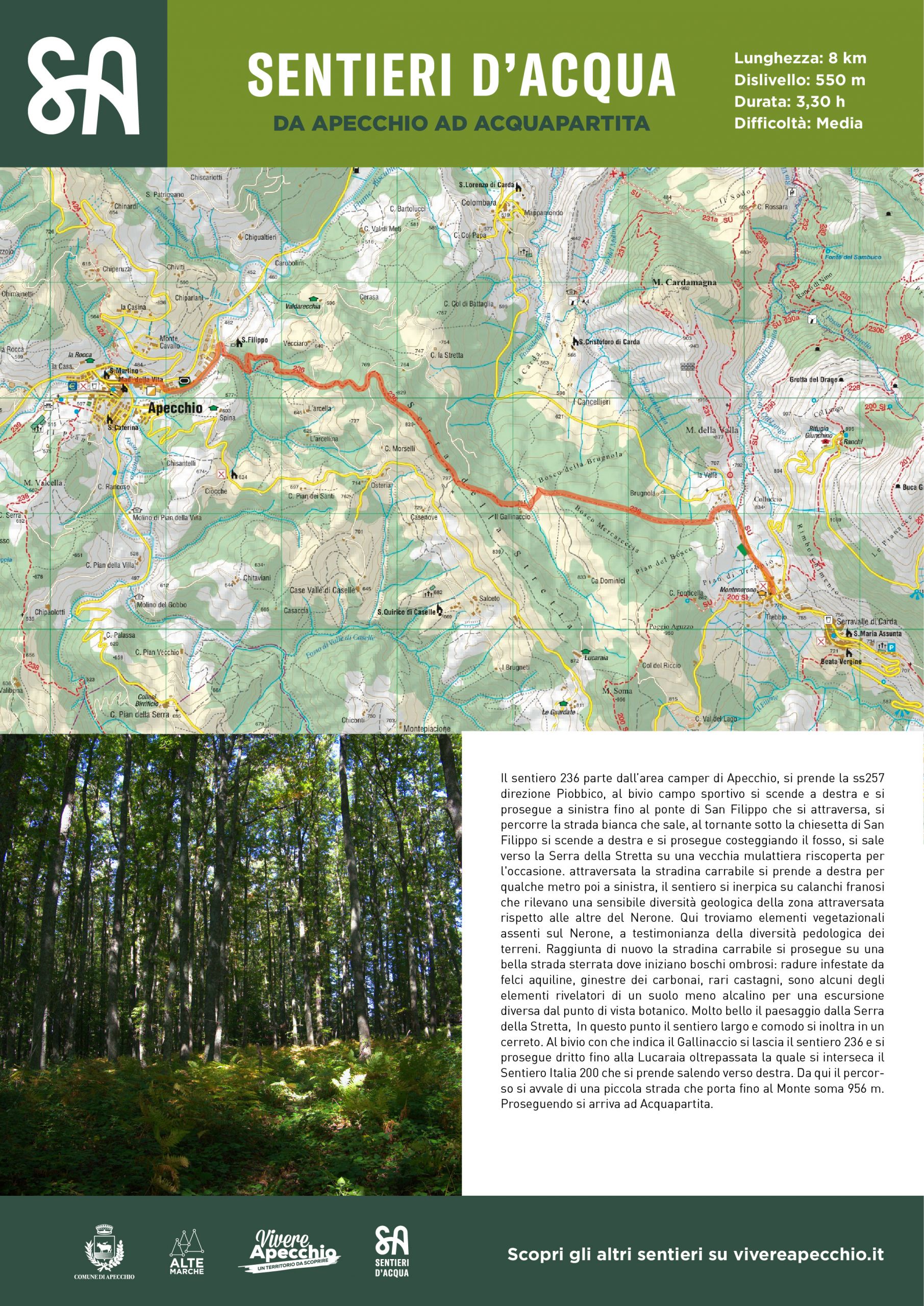
Trail 236 leads us from the town of Apecchio to the village of Acquapartita, keeping us constantly immersed in the coolness of lush woods, with sections of tall timber. With a relatively moderate elevation gain, it is then possible to continue onto the Sentiero Italia toward Serravalle di Carda or the Umbria region.
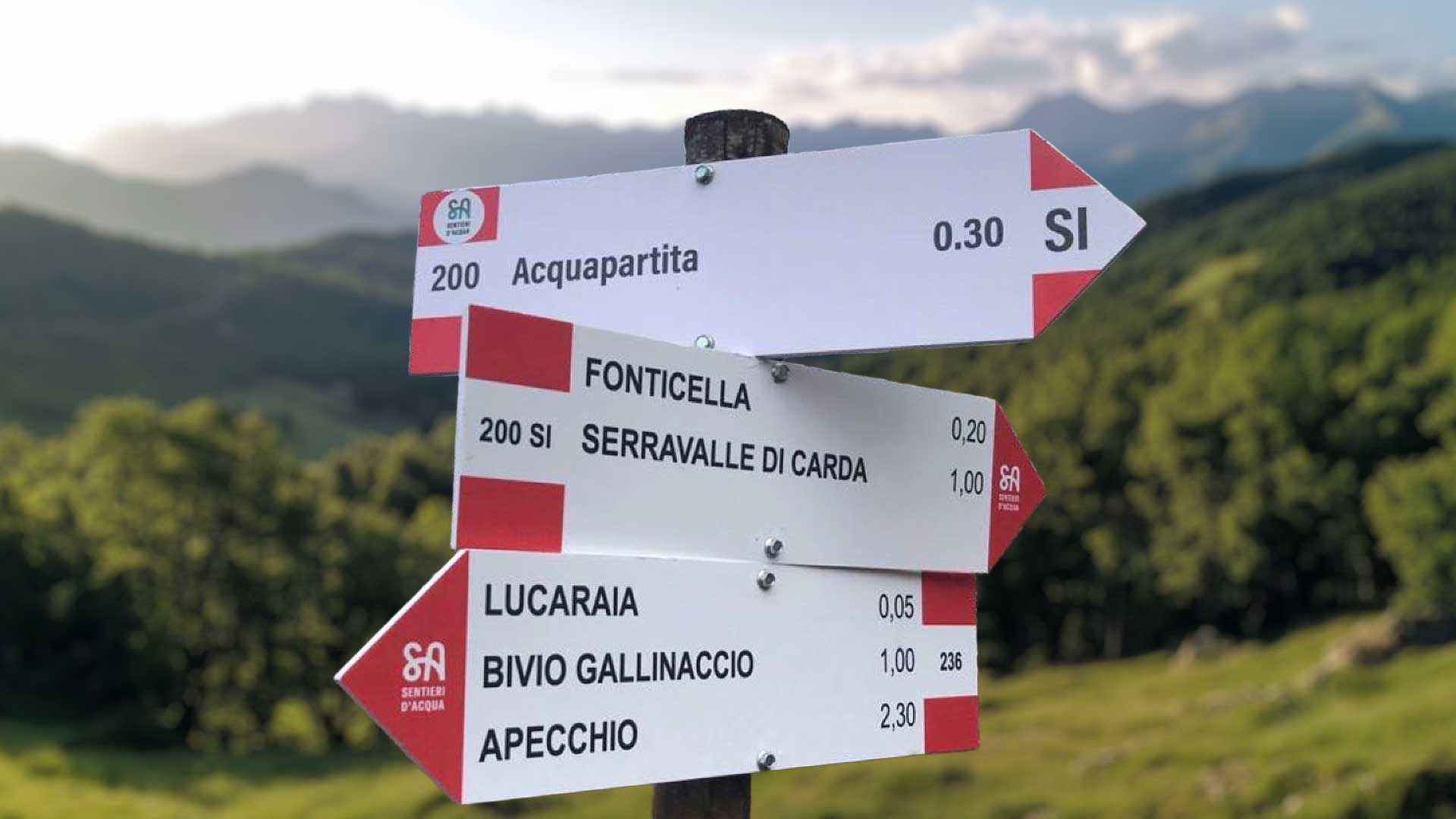
More than 7,000 kilometers, about 500 stages, and 20 regions: the Sentiero Italia, restored by the Italian Alpine Club (Club Alpino Italiano), is one of the longest trekking routes in the world.
Good manners on the trails are rarely the first thing that comes to mind when planning a trek. Our priorities are usually elsewhere: what to pack, what the weather will be like, or how to reach the trailhead. However, once we are out on the trails, failing to follow certain “hiker etiquette” rules can spoil both our own experience and that of those we meet along the way.
1 – Right of way on the trails
Remember that on all trekking routes, those climbing uphill have the right of way. If you are on a narrow trail that doesn’t allow both parties to pass and you are heading downhill, step aside. You must allow those coming up to maintain their rhythm and effort. If the trail is also used by pack animals—horses, mules, etc.—the hiker should yield the right of way to the animal. If, unfortunately, dirt bikes are encountered on the path, it is up to them to yield to the hiker.
2 – How to pass on the trails
The trail is not a highway. If there are hikers in front of you moving at a slower pace, pass them politely (in theory, this should be done on highways, too). A friendly “good morning” to announce your approach from behind reconciles you and your temporary hiking companions with good manners and the harmony of nature. Pass where the trail widens, avoiding forcing those in front of you to stop. Unless, of course, the person ahead of you—knowing trail etiquette—decides to let you pass; this is another good practice when you realize someone behind you is moving at a faster pace than yours.
3 – No noise: we are on the trails to listen to nature’s soundtrack
For hiking enthusiasts, hitting the trails means immersing oneself completely in the surrounding nature. Being enveloped by the sounds of the forest and streams, the birdsong, and the rustle of leaves in the wind is all we need. The volume of our voices on the trails, especially when walking in a group, should be modulated. Avoiding making human voices the prevailing soundtrack of the walk is a good thing. In short: talking is fine, shouting is not. Even if a breathtaking view suddenly appears before you—one of the main reasons we hike—try to contain the urge to scream with joy. Furthermore, bringing portable speakers is definitely not a good idea. Wildlife can be startled by music played through speakers, which can have serious repercussions on their survival.
4 – Do not widen the trail: if the path exists, it serves a purpose
Trails are meant to be followed. Going off-trail is dangerous for your own safety. Especially on paths that are not perfectly clear or well-maintained, it is essential to stick to the evident line of travel. Wandering left and right will not only increase the risk of losing the main track and getting into trouble, but it will also make it much harder for those coming after us to distinguish the path, ultimately jeopardizing the safety of all hikers.
5 – When you meet other hikers, don’t act like you’re in the city
Experienced hikers know it well: one of the most pleasant moments of an excursion is meeting other hikers, complete strangers, and doing what we never do on city streets—we greet each other. It is a sign of sharing the path, almost a metaphor for life where the trail and the passage of time blur together. We are on the same trail, a bit like being “in the same boat.” So, if you are a beginner, don’t act like you’re in the city. Don’t look away or be grumpy when you meet someone: greet them with a smile.
6 – How to behave if you are hiking with a dog
For dog lovers, hitting the trails with their four-legged friend is pure happiness. However, remember that having a dog comes with increased responsibility. You must keep your dog on a leash whenever necessary. This is important for your dog’s own safety, for example, if you are crossing areas where wolves or wild boars might be present. Furthermore, don’t forget that not everyone loves dogs. In fact, some people are afraid of them, and it is not a pleasant experience to have a dog run up to them off-leash around a bend, perhaps barking. We can already hear you saying: “But my dog wouldn’t hurt a fly.” This excuse is unacceptable: first of all, because it doesn’t diminish the fear of a fellow hiker. Secondly, because no one can guarantee how a dog will react to strangers, especially when children are involved. Also, a final important point: do not leave your dog’s waste on the trail, “because after all, it’s nature.” If everyone did that, it would be harmful to the environment.
7 – How to behave when trekking in a group
Some people love hiking solo, others in groups. Then there are those who like to alternate between the two. Obviously, personal preferences are for everyone to choose. One thing is certain: all the rules of etiquette we have listed in this article become even more critical when moving as a group. This applies first and foremost to the attention a group must pay to noise pollution, not just out of respect for other hikers, but for the environment itself. For nature, the impact of a group of trekkers is always more delicate than that of individual hikers. Just think about the impact on the trail: if the group is very large, the risk of dangerously widening the path is real. It is best, therefore, to position yourselves so as not to exceed the limits of the path, with all the risks we have already mentioned. In short: group trekking is absolutely encouraged, but the larger the group, the more mindful the approach to the trail must be.
8 – Leave no trace
Trekking implies, above all, having respect for the environment that surrounds us. Let’s put it this way: if you don’t do it for some universal ideal, do it for selfish reasons. If you leave bulky traces of your passage, you contribute to defacing nature, you encourage others to do the same, and ultimately, you make trekking less attractive. After all, would you go hiking in a place ruined by the passage of disrespectful hikers? The idea is not to alter the territory you visit, not even to leave “romantic” mementos. You know those who carve their names into tree bark? Imagine if everyone did that. Along the trails, only one memory of you should remain: the impressions of your footsteps, destined to be mixed with those of the hikers who will come after you.
Happy hiking to everyone!
CONTATTACI